What a general contractor license actually means, and why it matters for the kind of projects we take on.
A general contractor license is easy to misunderstand. Most people assume it is a piece of paper you need to build a house. It is that, but it is also a lot more. In Georgia, it is the state’s way of saying a contractor has been tested on the building codes, has demonstrated real experience, carries the required insurance, and is accountable to a licensing board for the work they do. That accountability is the whole point.
For the projects Daydream Design and Build takes on, high-end outdoor living with multiple permits and moving parts, home renovations, and new home construction, that license is not a formality. It is the difference between a contractor who can legally manage the whole project and one who can only do part of it.

What the License Covers
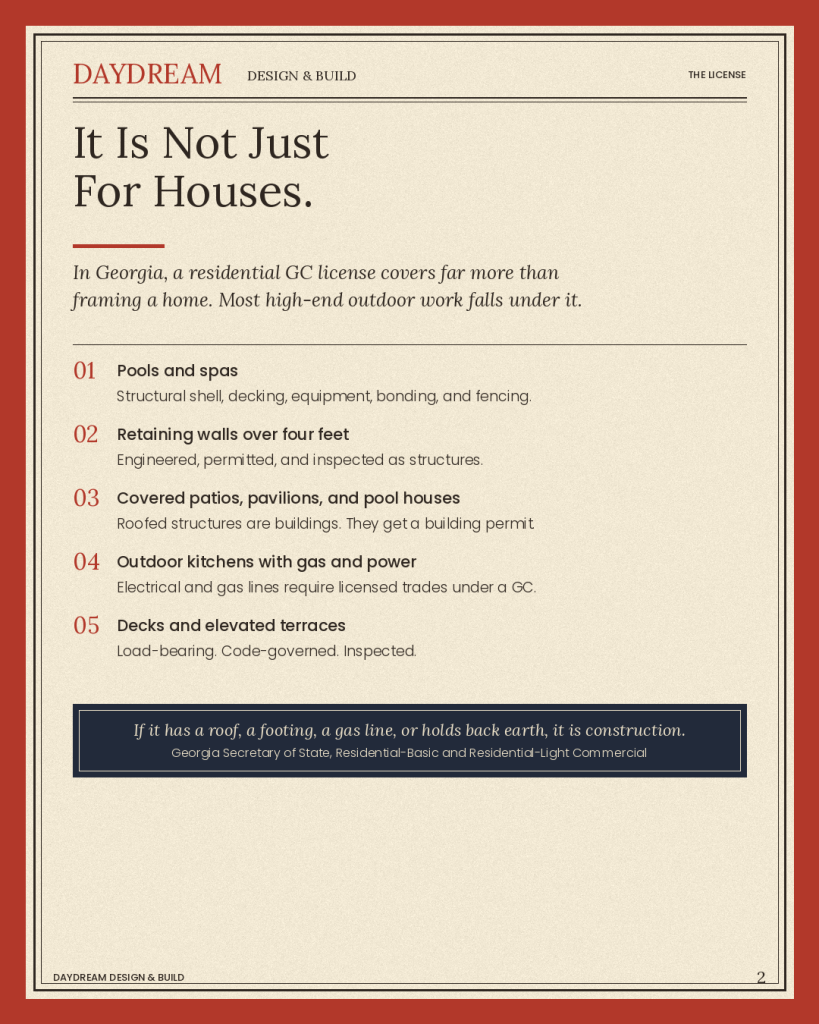
Georgia requires a licensed contractor for any residential construction work over $2,500. That threshold comes from O.C.G.A. 43-41 and has been in place since 2008. It applies whether the work is on the house or in the yard. A pool, a retaining wall, a covered patio, an outdoor kitchen, a pool house, a deck, or a full exterior renovation all fall under it once the project is past that dollar figure, which on high-end work is immediately.
The license comes in a few tiers. Residential-Basic covers single-family work. Residential-Light Commercial extends that to small commercial. The General Contractor license covers everything. Daydream holds a Georgia Residential General Contractor license, RBQA008500, which covers the full range of residential construction we do.
What the License Does Not Cover, and Why That Matters
Here is a detail that matters a great deal on outdoor living projects. Under Georgia law, a residential contractor cannot personally perform electrical, plumbing, gas, or HVAC work. That work has to be done by a trade licensed separately under Chapter 14 of the same code. A licensed GC is the one who brings those trades in, coordinates them, and takes responsibility for the whole.
An outdoor kitchen has gas and electrical. A pool has electrical bonding, equipment, and often gas heat. A pavilion has lighting and sometimes a fireplace. Each of those requires a licensed trade, and the person managing the project needs to be licensed to manage them. That is what a GC is for.
What We Can Take On
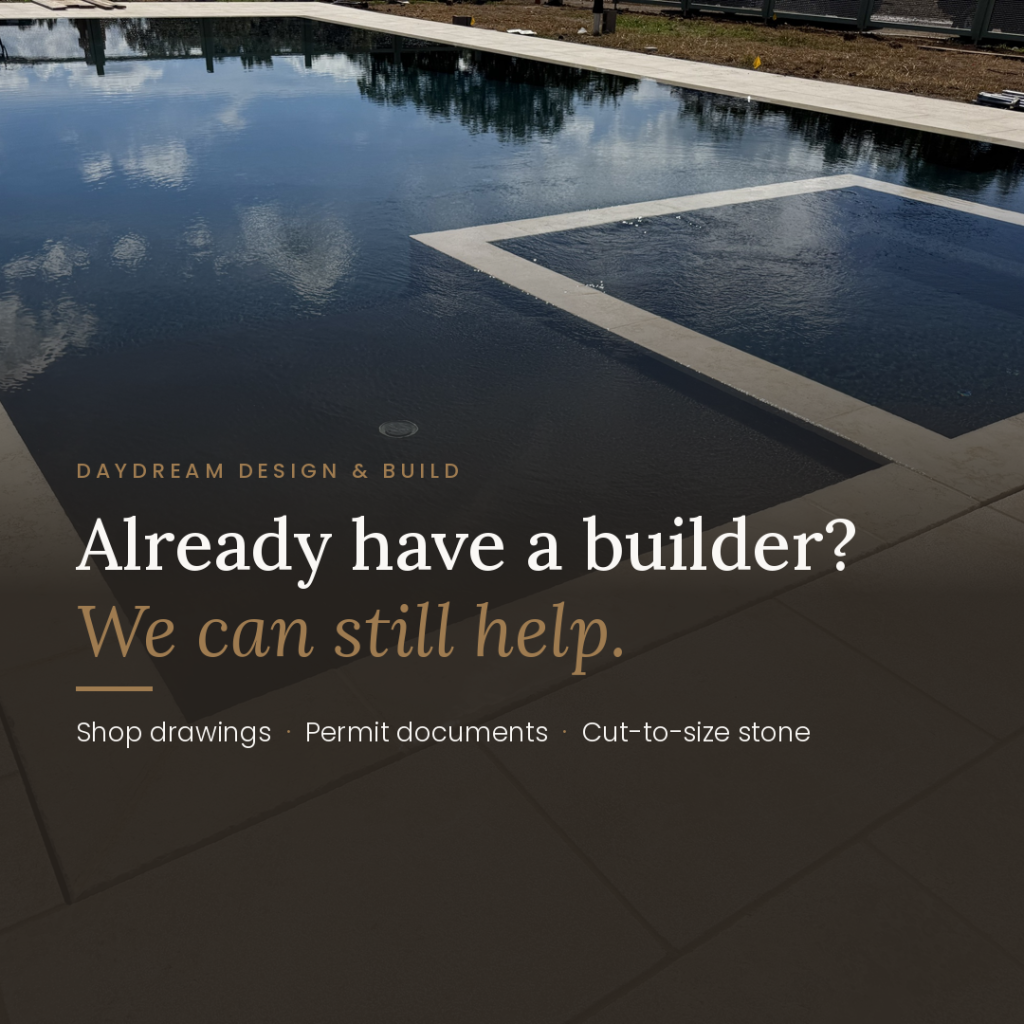
The license is what lets us take on the projects that have the most moving parts. A full outdoor living build with a pool, retaining walls, a pavilion, an outdoor kitchen, and all the permits that go with it: land disturbance, erosion control, stormwater, electrical, gas, building. A home renovation that touches structure, electrical, and plumbing at the same time. New home construction from the foundation up.
These projects are not one trade. They are five or six trades, a stack of permits, a county inspector, an engineer, and a schedule that has to hold together across all of it. The GC license is what allows one firm to be responsible for the whole thing instead of the homeowner trying to coordinate it.
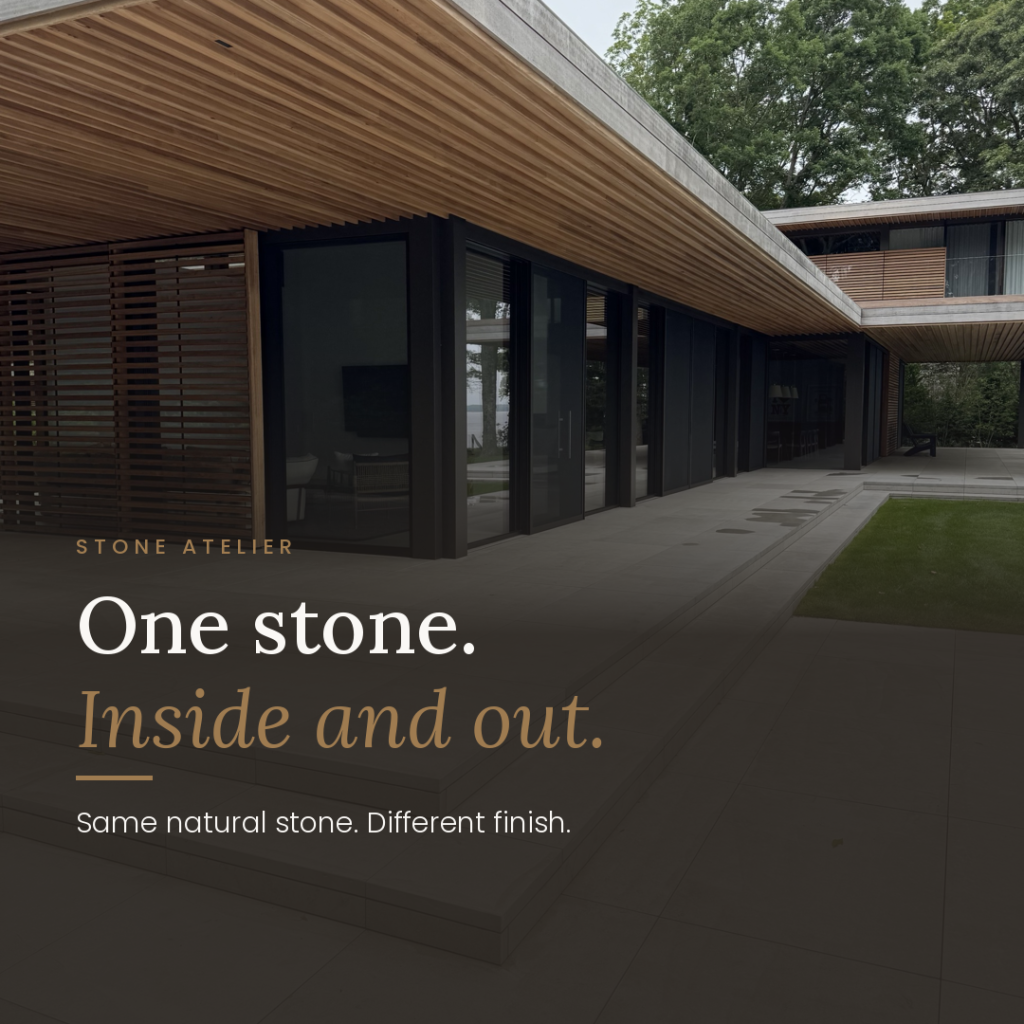
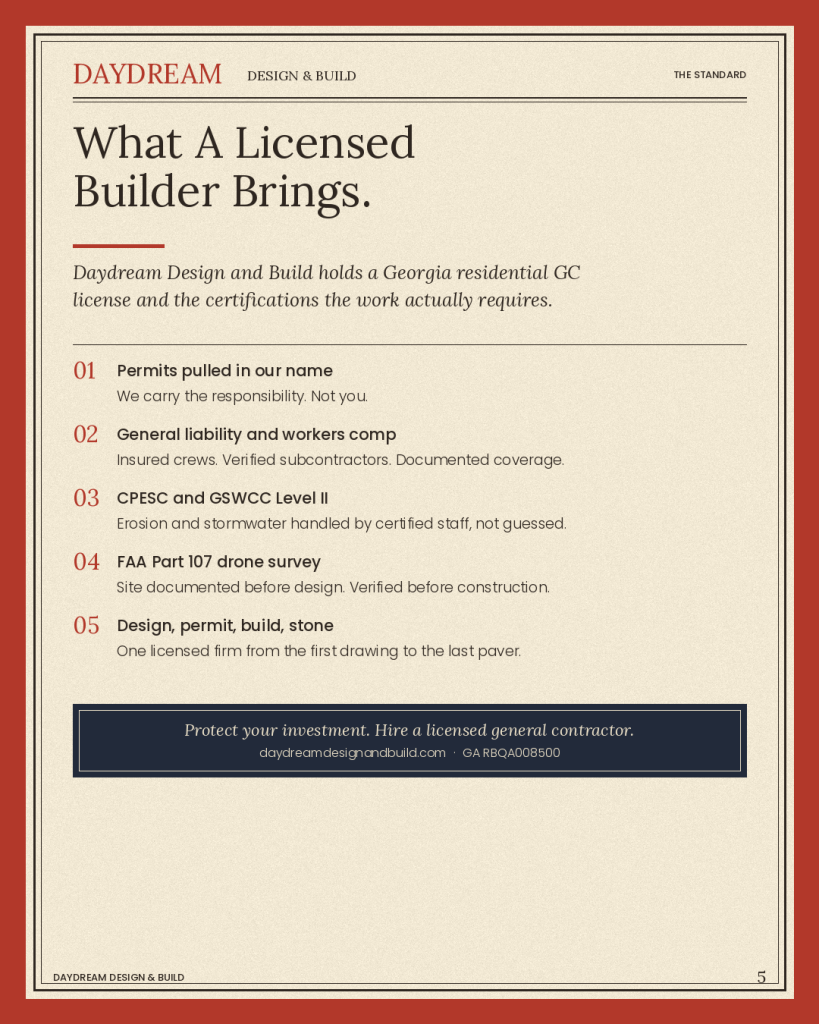
Beyond the GC license, we hold CPESC certification and GSWCC Level II, which cover erosion and stormwater, two of the permits that stall outdoor projects most often. We hold FAA Part 107 for drone survey, which is how we document a site before we design on it. Through Stone Atelier we source and fabricate the natural stone the project is built from. Each of those is a piece of the same idea: fewer handoffs, one accountable firm.
Why Testing Matters
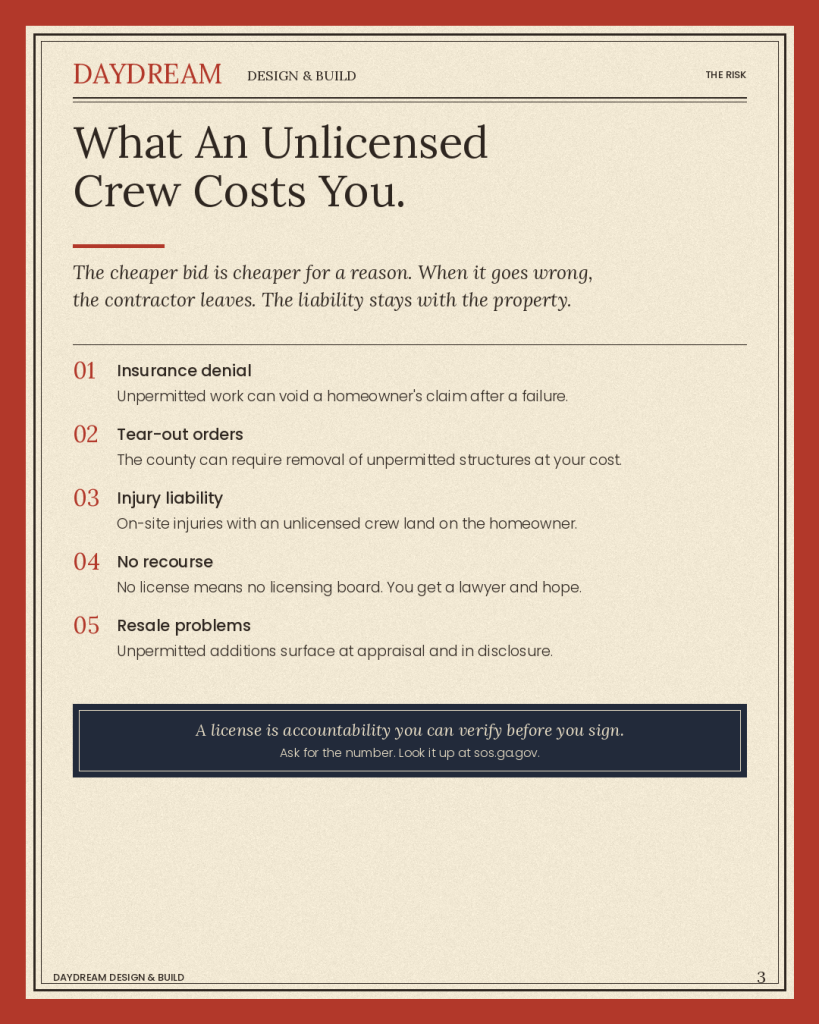
To get a Georgia contractor license, you sit for an exam on building codes, business law, and construction standards. You prove experience. You carry insurance. You maintain the license with continuing education. None of that guarantees a perfect project, but it does mean the person you hired has been tested on the standards the county is going to inspect your project against, and has something to lose if the work is not right.
On a high-end outdoor living project, the codes are not simple. Stormwater and impervious surface rules vary by county. Pool electrical bonding is its own inspection. Tree protection ordinances affect what can be built where. Retaining walls over a certain height need engineering. Working with someone who has been tested on those standards and does this kind of work regularly is not about avoiding fines. It is about the project actually getting built the way it was designed.
How to Check
Any contractor working above the $2,500 threshold in Georgia should be able to give you a state license number. You can verify it on the Georgia Secretary of State licensing search in under a minute. Ask for the number before you sign. If a contractor hesitates, that tells you something.
We are glad to walk through what a project like yours would involve, which permits apply, and how we would manage it. The conversation starts with a site visit.
The full text of Georgia’s contractor licensing statute is at O.C.G.A. 43-41-2. This post is a general explanation and is not legal advice.