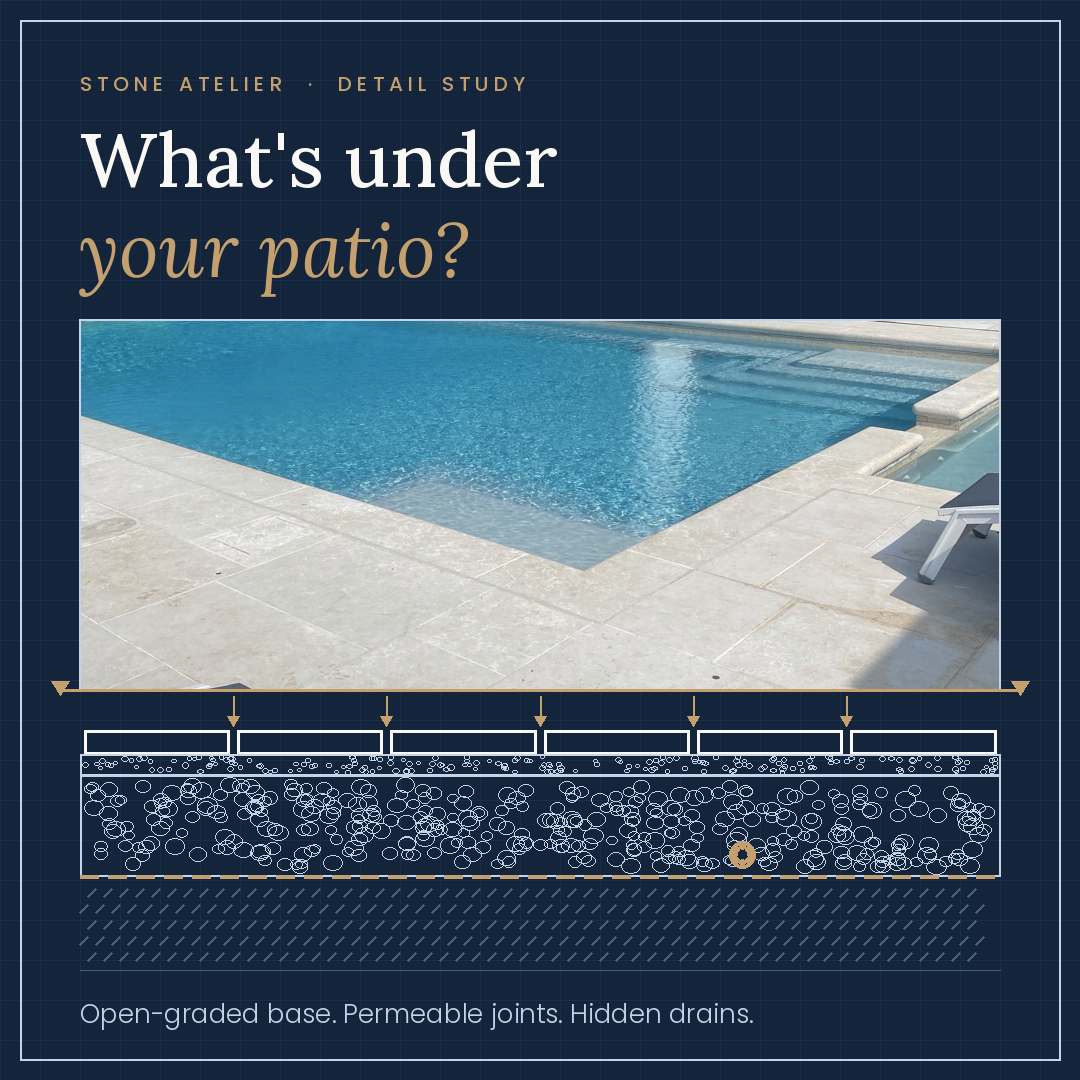
Short answer: We build natural stone patios on an open-graded base: geotextile fabric, #57 stone compacted in lifts, a hidden perforated PVC drain that ties into solid pipe, and #89 stone or trass bedding under the stone, with permeable joints. Water moves down through the patio and out instead of getting trapped underneath. Trapped water is what makes patios fail.
Stone is only as good as what it sits on. Here’s how the common methods work, where they fall short, and what we build instead.
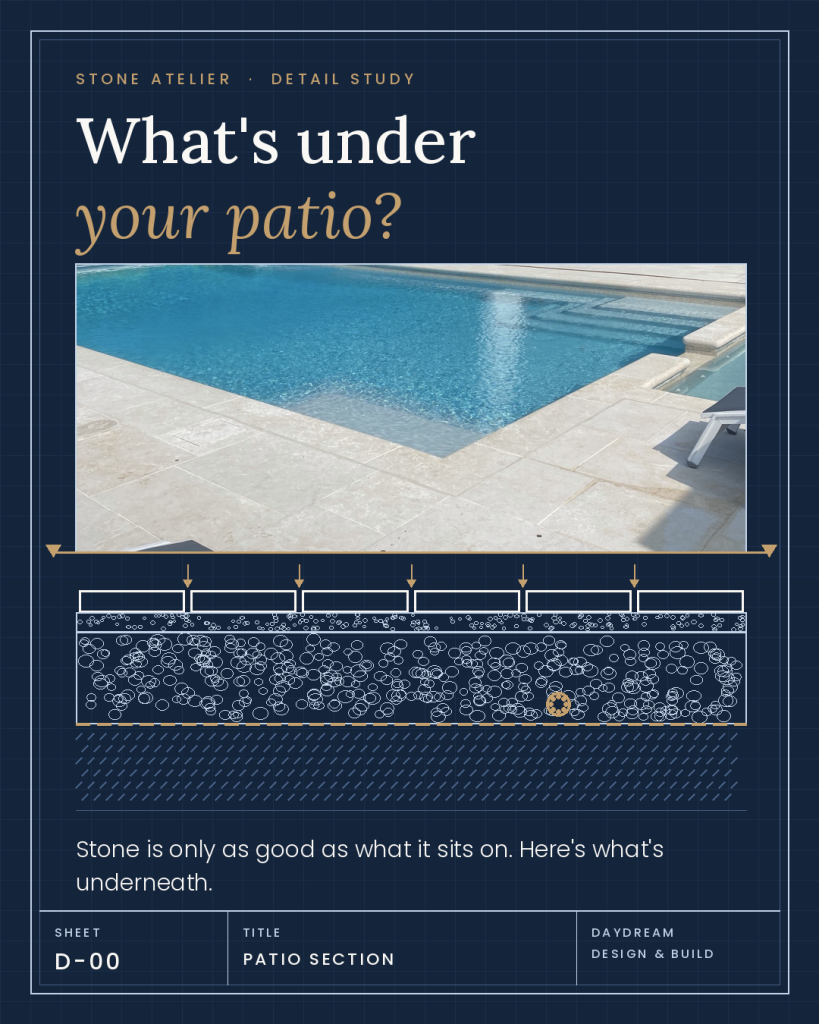
Stone is only as good as what it sits on. 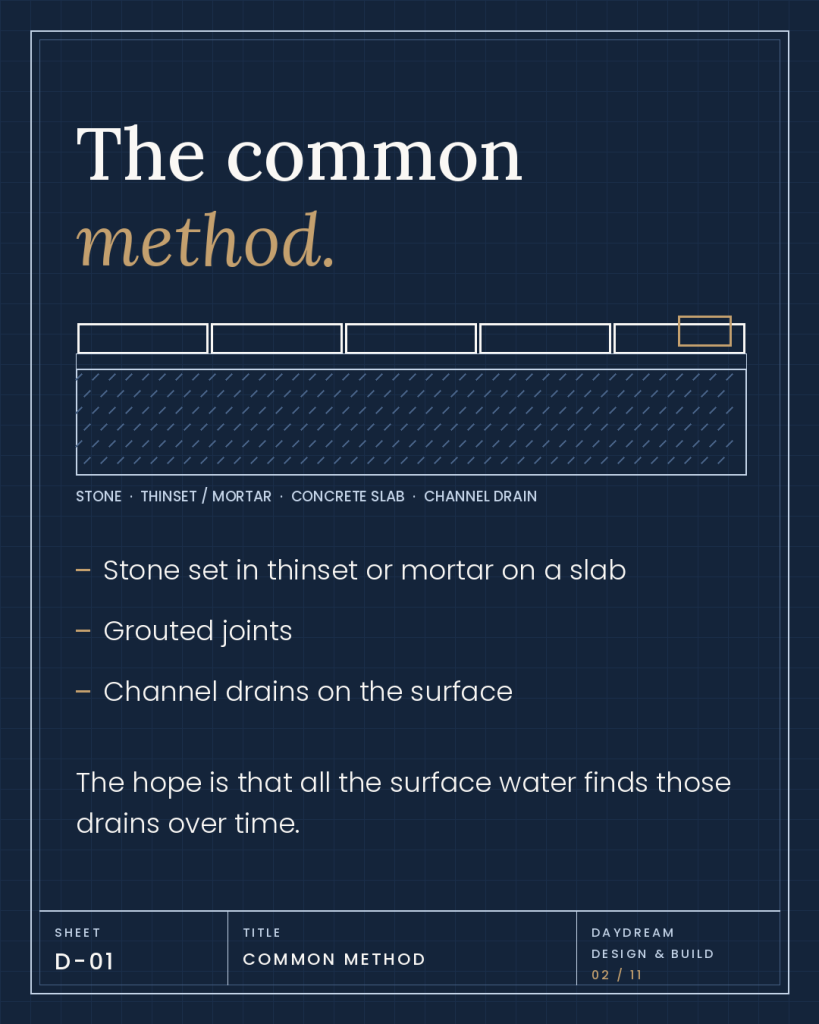
Mortar, grout and channel drains, hoping the water finds them. 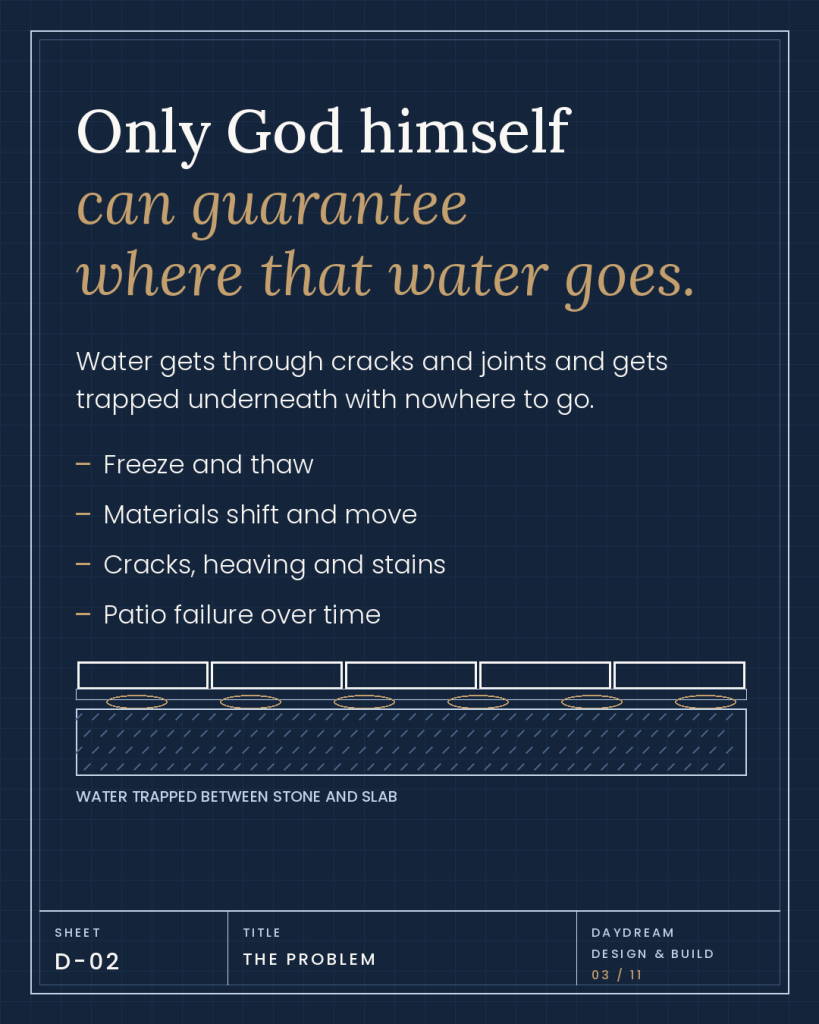
Trapped water leads to cracking, shifting and failure. 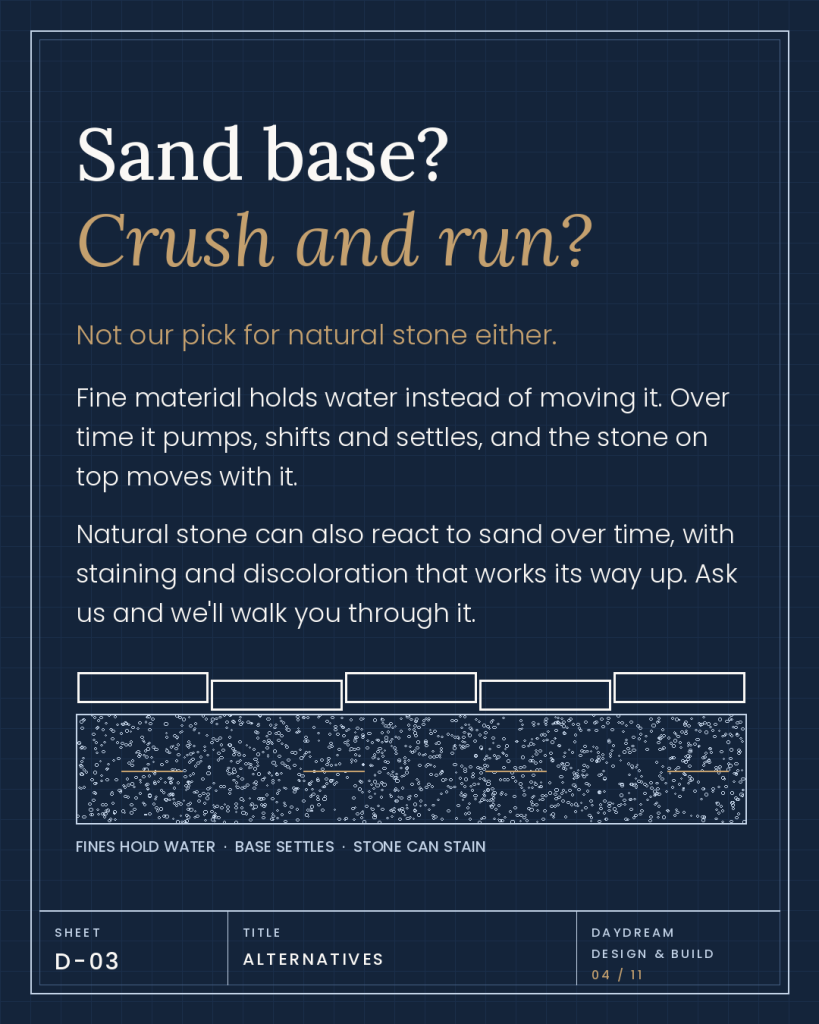
Fines hold water, the base settles, and the stone can stain. 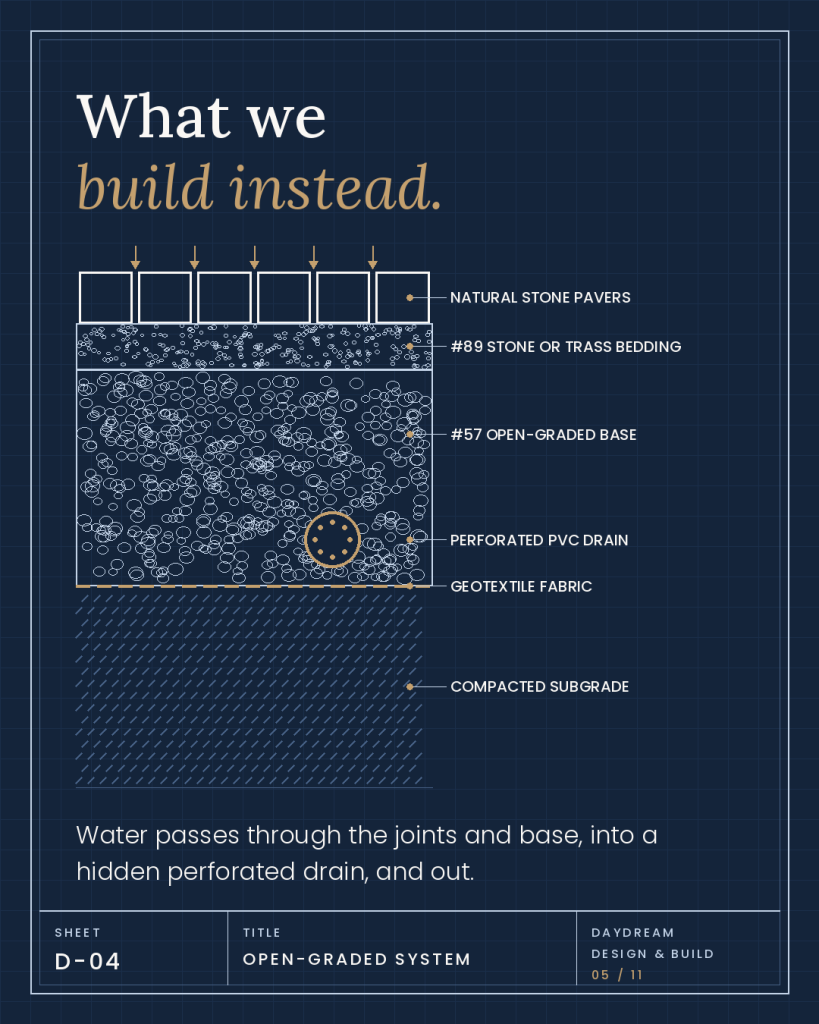
What we build instead. 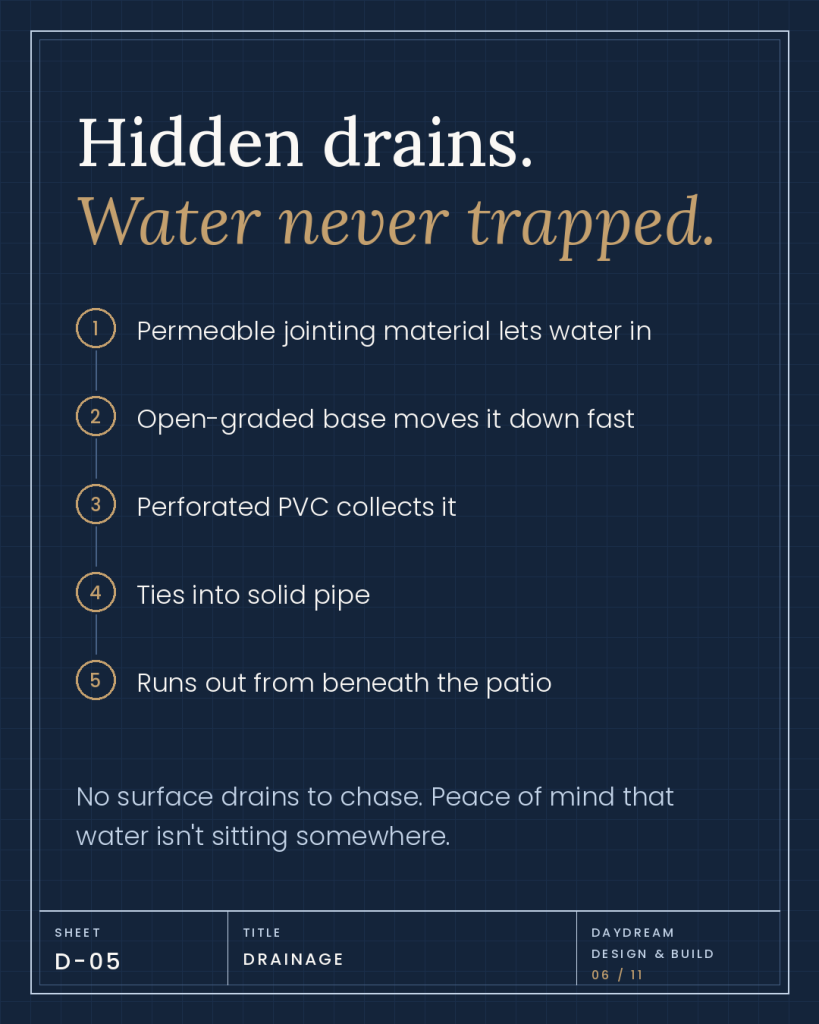
No surface drains to chase. 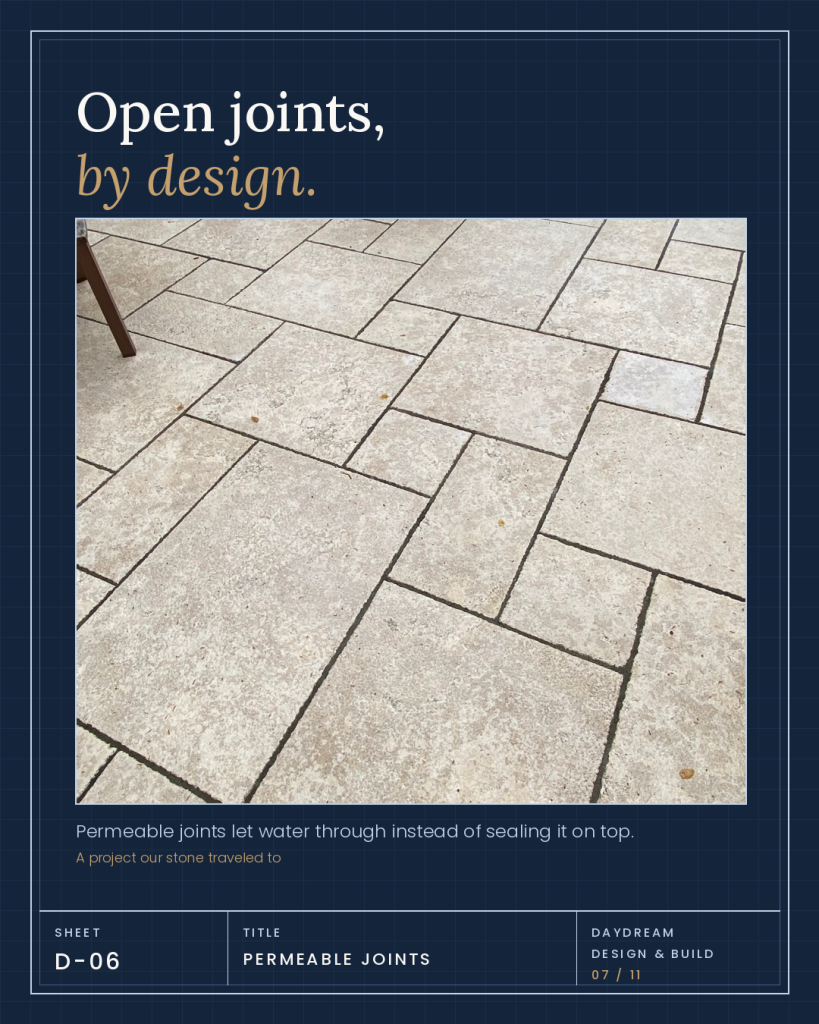
A project our stone traveled to. 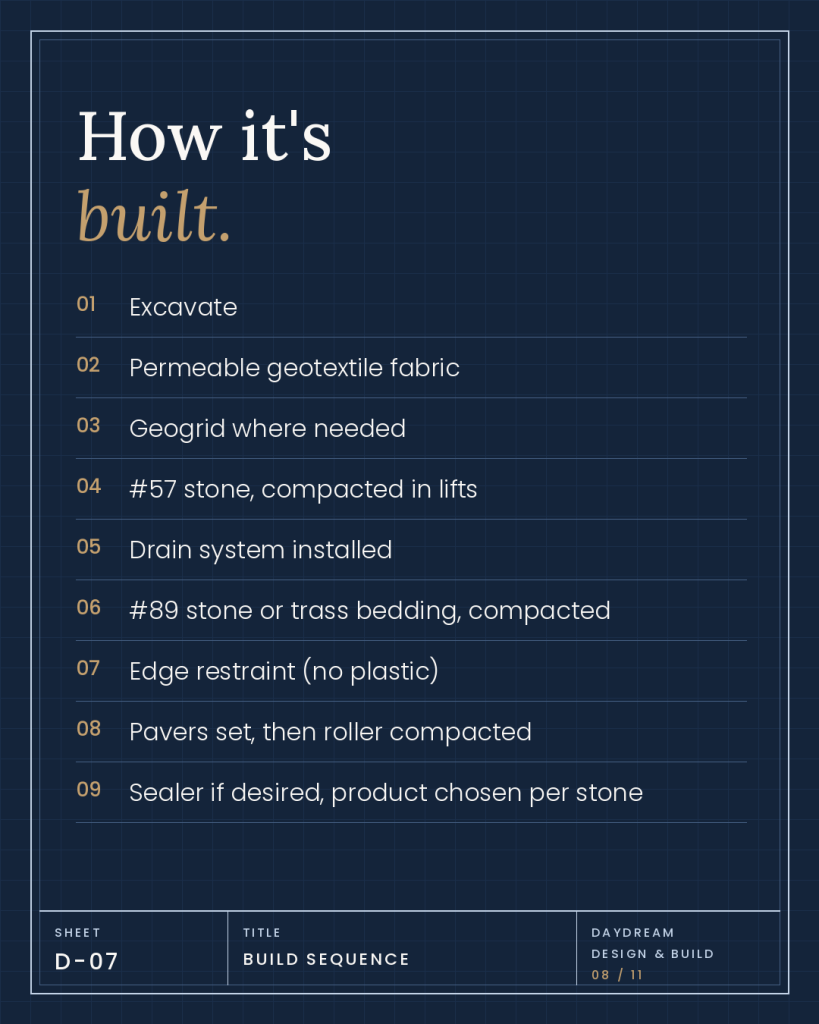
Excavation to final compaction. 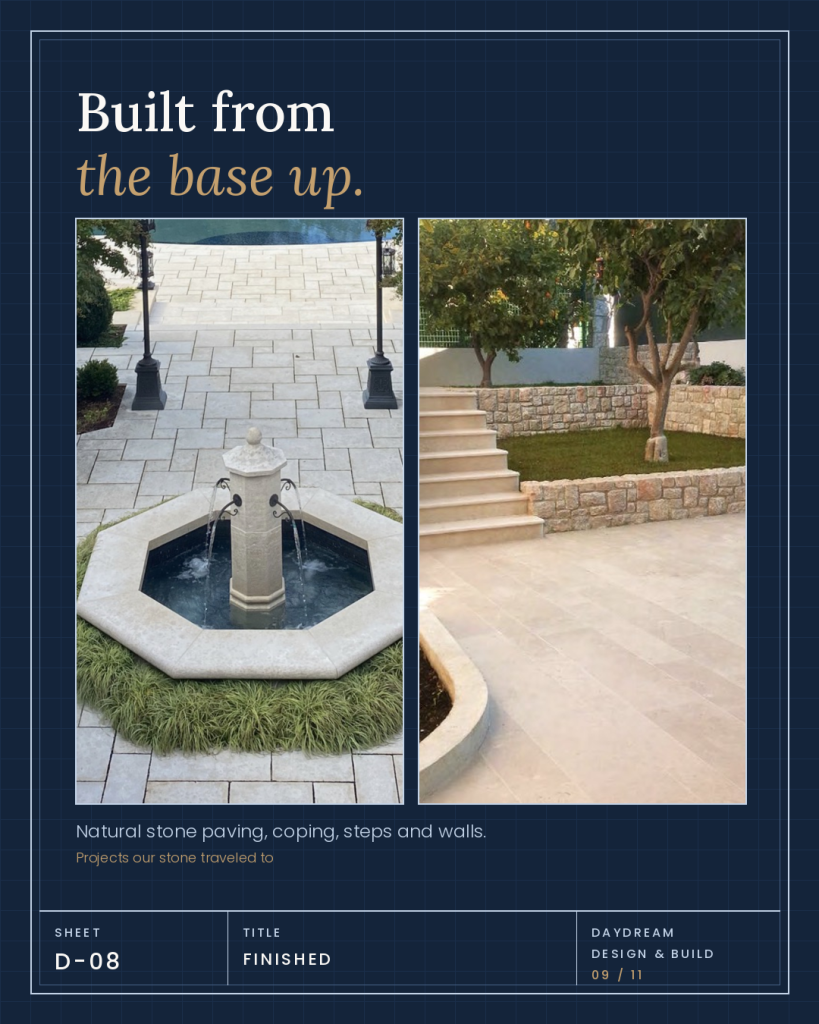
Projects our stone traveled to. 
Consulting, design and stone. 
Jesse House, founder of Daydream Design & Build.
The common method: stone on a concrete slab
A lot of stone patios are built the same way:
- Stone set in thinset or mortar on a concrete slab
- Grouted joints
- Channel drains on the surface
The hope is that over time all the surface water finds those drains. Only God himself can guarantee where that water goes. Water gets in through cracks and joints and gets trapped between the stone and the slab with nowhere to go.
Over time that leads to:
- Freeze and thaw damage
- Materials shifting and moving
- Cracks, heaving and stains
- Patio failure
Why not a sand base or crush and run?
They’re not our pick for natural stone either. Fine material holds water instead of moving it. Over time the base pumps, shifts and settles, and the stone on top moves with it.
Natural stone can also react to sand over time, with staining and discoloration that works its way up from below. Ask us and we’ll walk you through it.
What we build instead: an open-graded system
An open-graded base uses clean, angular stone with space between the pieces, so water drains through it instead of sitting in it. Here are the layers from the bottom up:
| Layer | What it does |
|---|---|
| Compacted subgrade | Stable native soil under the system |
| Geotextile fabric | Keeps soil from migrating up into the base |
| Geogrid (where needed) | Adds stability on weaker soils |
| #57 open-graded base | Structure, plus a fast path for water |
| Perforated PVC drain | Collects water inside the base |
| #89 stone or trass bedding | A level, compacted setting bed for the stone |
| Natural stone pavers | Set with permeable jointing material |
Permeable joints and hidden drains
- Permeable jointing material lets water drain through the joints instead of sitting on top
- The open-graded base moves it down fast
- Perforated PVC collects it
- It ties into solid pipe
- It runs out from beneath the patio
Permeable joints are a deliberate part of the system. Grouted joints try to seal water out at the surface. Permeable joints let it pass down into the base, where it can drain away.
There are no surface drains to chase, and you have peace of mind that water isn’t sitting somewhere under your patio.
How it’s built, step by step
- Excavate
- Install permeable geotextile fabric
- Add geogrid where needed
- Place #57 stone, compacted in lifts to meet compaction requirements
- Install the drain system
- Add #89 stone or trass bedding, compacted
- Install edge restraint (we don’t recommend plastic)
- Set the pavers, then roller compact
- Seal if desired, with a product chosen for the specific stone
Trass bedding: extra insurance
For added long-term stability, we can use a trass bedding system like Romex. Trass bedding also acts as an edge restraint. Without it, we plan a proper edge restraint for the project. We don’t recommend plastic.
Frequently asked questions
What is an open-graded base?
A base made of clean, angular crushed stone like #57, without fine particles. The open spaces between stones let water drain through instead of being held in the base.
Why is mortar on a concrete slab a problem for stone patios?
Water that gets through joints and cracks can be trapped between the stone and the slab. With freeze-thaw cycles, that trapped water can lead to cracking, shifting, staining and failure over time.
Is a sand base bad for natural stone?
Sand holds water and can shift and settle over time. Natural stone can also react to sand, with staining and discoloration from below.
Do you recommend a sealer?
It depends on the stone. We don’t recommend one specific sealer for every project. The product should be chosen for the stone being used.
Can you help if someone else is building my patio?
Yes. We offer consulting, design and natural stone through Stone Atelier, whether or not we’re the builder.
We help people succeed
Consulting, design and stone, from the base up. Learn more on our natural stone supplier page. Related reading: why test data matters when you choose natural stone.
Photos in this post show projects our stone traveled to.